Search This Blog

Monday, October 8, 2012

Buridibod with Green Saba and Malunggay

In this Ilocano dish, the shredded green bananas and mashed sweet potatoes thicken the liquid. Serves 4 Prep Time 10 minutes Cooking Time 10 minutes 1 cup camote 2 cups water 1 tablespoon olive oil 1/2 teaspoon garlic, crushed 1 medium red onion 1 cup green saba, shredded 1 cup water 1 cup oyster mushrooms salt and pepper to taste 2 bundles malunggay leaves, washed 1 tablespooon sesame oil 1 Boil camote in 2 cups water for 5 minutes. 2 Drain, then press with a masher or fork until it looks like mashed potatoes. Set aside. 3 In olive oil, sauté garlic, onion, and shredded saba until softened. 4 Set fire to medium heat and add 1 cup water. Simmer for 5 minutes, then add mushrooms. Let it simmer. 5 Add the mashed camote and stir. Stir in dash of salt and pepper. 6 Lastly, add malunggay leaves and sesame oil, and simmer for a few more minutes.

4 Smart Choices For Tough Times

How To Manage Your Money Freaked out by the economy? Smart girl. But, it turns out that showing shopping restraint can go a long way toward calming your nerves. "Not buying something offers an instant, powerful sense of control," says financial expert Jean Chatzky, author of Make Money, Not Excuses. Track your expenses in a spending diary to reveal places you can cut back. And, call your cable company, internet provider, and gym to see if the deals they're giving new cash-strapped customers can be extended to you. How To Manage Your Job In times like these, you need to become indispensable to the higher-ups. For starters, don't just meet a looming deadline--beat it, and make sure the right people know it. "You can be the hardest-working employee in the world, but if your boss isn't aware of it, you won't net any gains," says workplace expert Patty Sias, PhD. So, write emails that underscore achievements: The client meeting went well tells your boss that you're nabbing the company an edge. I'm getting you the report early so you can prepare for the meeting says that you endeavor to make your boss look good. How To Manage Your Health It's no secret that stress can have a detrimental effect on your well-being. "You can be irritable, distracted, and piling on pounds," says Pamela Peeke, MD, author of Body For Life For Women. Fortunately, you can medicate with movement. When you do physical activity--even a vigorous walk--you increase the production of beta endorphins, chemicals that relax you. So, make it a priority to be active every day. How To Manage Your Relationship When your guy is anxious, it's important to play a supportive role--especially if he's so down that he spends every night in front of the TV. "Acknowledge that it's a tough time, but find activities that get you out of depressing routines," suggests Erik A. Fisher, PhD, co-author of The Art Of Managing Everyday Conflict. Even casually discussing your dream jobs while on a cheap date can act as motivation on your quests to achieve them.

Sunday, October 7, 2012

Chavez says he'll accept result of Venezuela vote

CARACAS, Venezuela (AP) — President Hugo Chavez's crusade to transform Venezuela into a socialist state, which has bitterly divided the nation, was put to the stiffest electoral test of his nearly 14 years in power on Sunday in a closely fought presidential election. Both camps said turnout was high, with millions of Venezuelans casting ballots. Long lines formed at many polling centers, with queues of hundreds of voters snaking along sidewalks and around blocks in many parts of Caracas. Chavez's challenger, Henrique Capriles, has united the opposition in a contest between two sides that distrust each other so deeply there were concerns whether a close election result would be respected. "We will recognize the results, whatever they are," Chavez told reporters after casting his vote in Caracas. Chavez was greeted at the polling center by American actor Danny Glover and Guatemalan Nobel Peace Prize laureate Rigoberta Menchu. He said he was pleased to see a "massive turnout." The stakes couldn't be higher. If Chavez wins a new six-year term, he gets a free hand to push for an even bigger state role in the economy, further limit dissent and continue to befriend rivals of the United States. With a Capriles win, an abrupt foreign policy shift can be expected, including halting preferential oil deals with allies such as Cuba, along with a loosening of state economic controls and an increase in private investment. A tense transition would likely follow until the January inauguration because Chavez's political machine thoroughly controls the wheels of government. Some Venezuelans were nervous about what might happen if disputes erupt over the election's announced outcome. "There's a little anxiety on one side and also on the other," said Deyanira Duarte, a housewife who voted for Capriles in downtown Caracas. She said she was worried about what could happen if there were a dispute. Others said they were simply pleased to be out backing their candidate. Carlos Julio Silva, a bodyguard employed by a private security company, said whatever his faults, Chavez deserves re-election for helping people with programs including free medical care and public housing. "There is corruption, there's plenty of bureaucracy, but the people have never had a leader who cared about this country," Silva said after voting for Chavez at a school in the Caracas slum of Petare. "That's why the people are going to re-elect Hugo Rafael Chavez Frias." Chavez's critics say the president has inflamed divisions by labeling his opponents "fascists," ''Yankees" and "neo-Nazis," while Chavez backers allege Capriles would halt generous government programs that assist the poor. During Chavez's final rally Thursday in Caracas, he shouted to the crowd: "We're going to give the bourgeoisie a beating!" Reveille blared from sound trucks around the capital to awaken voters on Sunday morning, and the bugle call was later replaced by folk music mixed with a recording of Chavez's voice saying "those who love the homeland come with me." At many polling places, voters started lining up hours before polls opened at dawn. "I'm really tired of all this polarization," said Lissette Garcia, a 39-year-old clothes seller and Capriles supporter who voted Sunday in the affluent Caracas district of Las Mercedes. "I want to reconnect with all my friends who are 'Chavistas.'" Some said they waited in line for more than four hours to vote, while in other areas the lines moved more quickly. Violence flared sporadically during the campaign, including shootings and rock-throwing during rallies and political caravans. Two Capriles supporters were shot to death in the western state of Barinas last weekend. Troops were dispatched across Venezuela to guard thousands of voting centers Sunday. Defense Minister Henry Rangel Silva said as he voted that all had been calm in the morning and he hoped that would continue. He said if any groups try to "disturb order, they should know there is an armed force prepared and equipped and trained... to put down any attempt at disturbances." He didn't identify the groups to which he was referring. Chavez held an impromptu news conference Saturday night, and when asked about the possibility of disputes over the vote, he said he expected both sides to accept the result. He says he has successfully emerged from about a year of cancer treatment. "It's a mature, democratic country where the institutions work, where we have one of the best electoral systems in the world," Chavez told reporters at the presidential palace. But he also said he hoped no one would try to use the vote to play a "destabilizing game." If they do, he said, "we'll be alert to neutralize them." His opponents mounted a noisy protest in Caracas and other major cities on Saturday night, beating pots and pans from the windows of their homes to show displeasure with Chavez — and also their hopes for change. Drivers on downtown streets honked horns, joining the din. The 40-year-old Capriles, a wiry former governor affectionately called "Skinny" by supporters, has infused the opposition with new optimism, and opinion polls pointed to him giving Chavez his closest election. Some recent polls showed Chavez with a lead of about 10 percentage points, while others put the two candidates about even. "Chavez is going to fight until his last breath. He doesn't know how to do anything else," said Antonio Padron, a bank employee backing the president. Padron expressed optimism that the 58-year-old Chavez would win, noting the leader has survived a fight with cancer that has included surgery, chemotherapy and radiation treatment. But Padron predicted a close finish: "It's a tough fight. The opposition has never been this strong." Chavez won the last presidential vote in 2006 with 63 percent of the vote. A former army paratroop commander first elected in 1999, Chavez has presided over an oil boom and has spent billions of dollars on government social programs ranging from cash benefits for single mothers to free education. But he has suffered declining support due to one of the world's highest murder rates, 18 percent inflation, a deteriorating electrical grid and a bloated government accused of endemic corruption and mismanagement. While his support has slipped at home, Chavez has also seen his international influence ebb since he emerged in the mid-2000s as leader of a like-minded club of newly elected Latin American leftist presidents. "I want to tell President Chavez, I want to tell him his cycle is over," Capriles said at his final campaign rally Thursday. Capriles says Chavez has stirred up hatred, hobbled the economy by expropriating private businesses and squandered oil wealth. He criticized Chavez's preferential deals supplying oil to allies, including one that lets Cuba pay with the services of Cuban doctors. "We aren't going to finance the political model that exists in Cuba," Capriles said in a TV interview last week. "But we aren't going to break off relations with Cuba." Chavez accumulated near-absolute power over the past decade thanks to his control of the National Assembly, pliant institutions such as the Central Bank and friendly judges. Gino Caso, an auto mechanic, said he would vote for Capriles because he thought Chavez was power-hungry and out of touch with problems such as crime. He said his son had been robbed, as had neighboring shops. "I don't know what planet he lives on," Caso said, gesturing with hands blackened with grease. "He wants to be like Fidel Castro — end up with everything, take control of the country." Political analyst Ricardo Sucre said he expected the election to show "two halves, more or less even." Regardless of the result, he said, Venezuelans are likely to remain deeply divided by politics for years to come.

'Bangsamoro' OK'd as gov't, MILF forge landmark deal
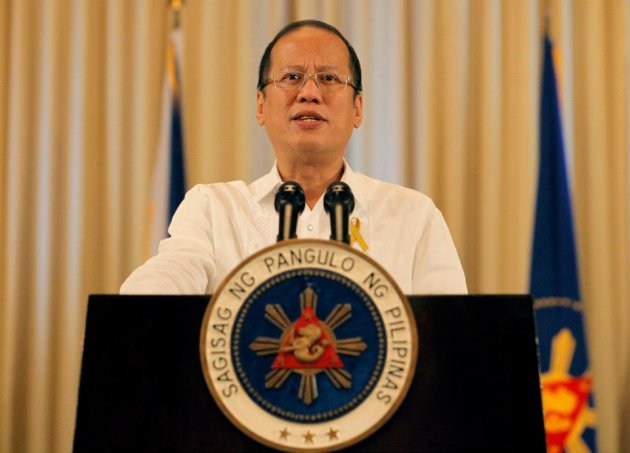
The "Bangsamoro" will be a new autonomous political entity in the Philippines, President Benigno "Noynoy" Aquino III on Sunday said, as he announced that the government has forged a deal ending the decades-old insurgency of the Moro Islamic Liberation Front (MILF). "The ARMM (Autonomous Region of Muslim Mindanao) is a failed experiment. Many of the people continue to feel alienated by the system, and those who feel that there is no way out will continue to articulate their grievances through the barrel of a gun," the President said. "And now, we have forged an agreement that seeks to correct these problems," Aquino said. "This agreement creates a new political entity, it deserves a name that symbolizes and honors the struggles of our forebears in Mindanao. That name will be Bangsamoro," Aquino said. He added that the new deal is seen to pave the way for "final, enduring peace in Mindanao." "It brings all former secessionist groups into the fold; no longer does the Moro Islamic Liberation Front aspire for a separate state," Aquino noted. The announcement came after the latest round of protracted peace talks between the government and the Muslim rebels ended in Malaysia Saturday. There have been 32 rounds of negotiations since 2003, with 13 rounds under the Aquino incumbency. The President, however, noted, that "the Philippines remains one nation and one people," adding that "the Constitution and lawful processes shall govern the transition to the Bangsamoro." "National government will continue to exercise exclusive powers of defense and security, foreign policy, monetary policy and coinage, citizenship, and naturalization," Aquino said. "The Filipinos of Bangsamoro, on the other hand, will be assured a fair and equitable share of taxation, revenues, and the fruits of national patrimony," he added. The new autonomous political entity, Aquino said, will also "enjoy equal protection of laws and access to impartial justice." Peace in Mindanao is still a work in progress, however, the President stressed, adding that "there are still details that both sides must hammer out." "Promises must be kept, institutions must be fixed, and new capacities must be built nationally and regionally in order to effectively administer the Bangsamoro. The citizenry, especially the youth, must be empowered so that new leaders may emerge," the President noted. The pact has yet to be signed, with Aquino adding that details of the newly forged deal will be published online and in national papers in days. "Nakalahad po ang lahat, at wala kaming tangkang magkubli o maglihim (All details will be bared and we have no intention of keeping the public in the dark)," Aquino said. "Sinuri po namin nang maigi ang kasunduang ito; balanse ang ating naabot. Itinatama nito ang mali, at naglalagay ng mga mekanismo (We have scrutinized the agreement; we have achieved a balance. It corrects mistakes and establishes mechanisms)," he added. "Basahin po sana natin ang kasunduang ito hindi bilang 'sila' at 'kami,' kundi bilang nagkakaisang 'tayo' sa ilalim ng bandilang Pilipino (I hope this deal will be appreciated not in terms of 'them' or 'us' but as 'we' under one Filipino banner)," Aquino said.

Saturday, October 6, 2012

Brightest Star Explosion in History Reveals Lonely Supernova

The brightest exploding star ever seen with the naked eye in recorded history apparently experienced a quick and lonely death, a new study reveals. The discovery, which centered on a star explosion witnessed in the year 1006, suggests that many similar outbursts leave no companion star to accompany their demise. The most powerful exploding stars in the universeare supernovas, which are bright enough to momentarily outshine their entire galaxies. One type of star explosion, known as a Type 1a supernova, occurs when one star pours enough fuel onto a dying companion star known as a white dwarf to trigger an extraordinary nuclear explosion. The new study centered its sights on the supernova SN 1006, which was seen all over Earth in the spring of 1006 above the southern horizon of the night sky, in the constellation Lupus, just south of Scorpio. At its peak, researchers say the supernova, which exploded about 7,100 light-years away, was about one-quarter the brightness of the moon, luminous enough that people could have read by its light at midnight

Maar Volcanoes: Odd Explosions Beneath Earth Explained

The eruption of a so-called maar-diatreme volcano is short-lived but violent. Magma creeps up through a crack in the Earth's crust and mixes with water, setting off a series of explosions — as many as a few each hour for several weeks. When the action stops, a crater-topped, rock-filled fracture called a diatreme is left behind. Now researchers are proposing a new way to think about how these structures are formed, which could help geologists predict eruptions and find new sources of diamonds. "Previously it was thought that those explosions started at very shallow levels and got progressively deeper," geologist Greg Valentine, a professor at the University at Buffalo in New York, told LiveScience. This old model seemed to explain the shape of a diatreme, which sits like an inverted cone beneath a shallow maar, or crater. But that model didn't match with what geologists were finding at volcanic sites, Valentine said. If the explosions started at shallow levels and moved deeper, shallow rocks would be spewed from the mouth of the volcano first and the deeper rock deposits would pile up on top. At maar sites, however, scientists were finding deep rock fragments mixed mostly with shallow fragments, indicating that explosions occur at essentially every depth throughout the episode. [50 Amazing Volcano Facts] Valentine and James White, an associate professor at the University of Otago in New Zealand, created a new model to account for the apparently more jumbled order of explosions. Their model, published online Sept. 18 by the journal Geology, also shows that individual explosions are relatively small, and shallow explosions are more likely than deep explosions to cause eruptions. The last known maar-diatreme eruption occurred in 1977 in Alaska's remote Aleutian Range, forming two vents known as the Ukinrek Maars. The threats associated with these volcanoes tend to be localized, but they can still be significant, Valentine said. "These volcanoes can send ash deposits into populated areas. They could easily produce the same effects that the one in Iceland did when it disrupted air travel, so what we're trying to do is understand the way they behave," he explained in a statement. In another practical application for the model, Valentine said a better understanding of these volcanoes could help find diamonds. Diatremes are sometimes formed by a type of molten rock known as kimberlite, which has the deepest origins of all magmas on Earth. When this magma cools, it leaves behind rocks dense in crystals, sometimes holding diamonds. This past summer, Valentine and his colleagues in Buffalo simulated maar eruptions, burying and detonating explosives and then examining the craters. He said he is planning similar experiments for next summer to test out his new model.

Calif. gas prices hit all-time high

LOS ANGELES (AP) — It's a record, though just barely. The price of gasoline hit an all-time average high in California of $4.6140 a gallon Saturday, fueled by a reduced supply and a volatile market. The record was set by a fraction of a penny, according to AAA spokesman Michael Green. The previous high was $4.6096 on June 19, 2008. Prices throughout the state were expected to increase for several more days before leveling off, after a temporary reduction in supply triggered a price spike that saw fuming motorists paying $5 or more per gallon in some locations and station owners shutting down pumps in others. AAA's Daily Fuel Gauge report released Saturday said the average price for a gallon of regular unleaded across California rose 12 cents from its Friday mark of about $4.49. Saturday's price was the highest in the nation, with the Golden State leapfrogging Hawaii this week as the state with the most expensive fuel. The average price for a gallon of regular unleaded across California was 47 cents more than a week ago, according to the AAA report. "I seriously thought it was a mistake on the sign when we pulled in," said Nancy Garcia, 34, while filling her Honda Accord at a Chevron station in the Los Angeles neighborhood of Highland Park. She paid $4.65 a gallon for regular grade and said she couldn't afford to fill her tank all the way. When supplies drop, wholesale prices rise. Then distributors and station owners have to pay more to fill up their station's tanks. They then raise their prices based on how much they paid for their current inventory, how much they think they will have to pay for their next shipment, and, how much their competitors are charging. The national average Saturday was about $3.81 a gallon, the highest ever for this time of year. However, gas prices in many other states have started decreasing, which is typical for October. The dramatic surge came after a power outage Monday at a Southern California refinery that reduced supply in an already fragile and volatile market, analysts said, but the refinery came back online Friday and prices were expected to stabilize by next week. Patrick DeHaan, senior petroleum analyst at GasBuddy.com, predicted the average price could peak as high as $4.85. "There is some relief in sight but probably not for a couple of days. Early next week is when we may see some more significant declines ... but at retail prices, prices may climb for the next two to three days before they start to come down," he said. While prices were higher everywhere in California, there were variances Saturday. Chico had the lowest average price at $4.46, according to AAA, while San Luis Obispo was highest at $4.71. Prices averaged $4.67 in San Diego, $4.66 in the Los Angeles area, $4.55 in Fresno and $4.49 in Sacramento. The price of diesel has also increased, adding significant costs for truckers who typically put hundreds of dollars of fuel in their tanks. It's gotten so bad, some truckers may stop driving altogether, said Michael Shaw, spokesman for the California Trucking Association, whose members move 80 percent of the cargo on California's roads each year. "The fluctuation and rapid increase of prices makes it difficult to plan ahead and take on new contracts," he said. "It's difficult to operate in that environment." A web of refinery and transmission problems is to blame, analysts said. The situation is compounded by a California pollution law that requires a special blend of cleaner-burning gasoline from April to October, said Denton Cinquegrana, executive editor of the Oil Price Information Service, which helps AAA compile its price survey. "We use the phrase 'the perfect storm,' and you know what, this current one makes those other perfect storms look like a drizzle. I don't want to scare anyone, but this is a big problem," Cinquegrana said. "Run-outs are happening left and right." Among the recent disruptions, an Aug. 6 fire at a Chevron Corp. refinery in Richmond that left one of the region's largest refineries producing at a reduced capacity, and a Chevron pipeline that moves crude oil to Northern California also was shut down. There was some good news, however. Exxon Mobil Corp. said a refinery in Torrance returned to normal operations Friday after the power failure Monday disrupted production for most of the week. State officials said with the refinery coming back online, prices should start falling. Gasoline inventories in California, however, are still at their lowest point in more than 10 years, a situation made worse by the mandate for the special summer gasoline blend. Few refineries outside the state can make it, meaning there are few outside sources to draw from for help, Cinquegrana said. The California Air Resources Board was reviewing a request from the California Independent Oil Marketers Association for a waiver that would allow gas stations to begin selling winter-blend gasoline before Halloween. Some stations ran out of gas and shut down rather than take the risk of buying gas at soaring prices only to be stuck with a glut of overpriced fuel if prices dropped or if customers refused to absorb the extra cost that would be passed along to them. Mark Mitchell, co-owner of the Coast Oil fuel distributorship in San Jose, told the San Francisco Chronicle that none of the gas stations he serves had shut down, although some station owners had discussed it. When spot prices hit their peak, the stations would need to charge about $4.89 to break even, he said. "We get the gas — it's just at what price?" Mitchell told the newspaper. "You're not going to sell much when it goes up 40 cents in a day." ___

Extradited terrorism suspects appear in US courts

NEW YORK (AP) — A partially blind extremist Egyptian-born preacher charged in multiple terrorism plots entered a U.S. court for the first time Saturday without the use of his arms, complaining that prosthetic hooks he uses were taken away as he and four other terrorism defendants were flown to New York overnight from London. Abu Hamza al-Masri, 54, indicted under the name Mustafa Kamel Mustafa, entered a Manhattan courtroom under heavy security to face charges he conspired with Seattle men to set up a terrorist training camp in Oregon and helped abduct 16 hostages, two of them American tourists, in Yemen in 1998. Al-Masri came into court with both arms exposed through his short-sleeved blue prison shirt. His court-appointed lawyer, Sabrina Shroff, asked that his prosthetics be immediately returned "so he can use his arms." In the 1990s, al-Masri turned London's Finsbury Park Mosque into a training ground for extremist Islamists, attracting men including Sept. 11 conspirator Zacarias Moussaoui and "shoe bomber" Richard Reid. His court appearance followed soon after two other defendants brought to New York, Khaled al-Fawwaz and Adel Abdul Bary, entered not guilty pleas to charges that they participated in the bombings of two U.S. embassies in Africa in 1998. The attacks killed 224 people, including 12 Americans. They were indicted in a case that also charged Osama bin Laden. In New Haven, Connecticut, earlier in the day, Syed Talha Ahsan, 33, and Babar Ahmad, 38, entered not guilty pleas to charges that they provided terrorists in Afghanistan and Chechnya with cash, recruits and equipment. All five of the men face up to life in prison if they are convicted. Al-Masri, a one-time nightclub bouncer, entered no plea, saying only "I do" when he was asked by U.S. Magistrate Judge Frank Maas whether he swears that his financial affidavit used to determine is he qualifies for a court-appointed lawyer was correct. Shroff told Maas that al-Masri needed use of his arms. "Otherwise, he will not be able to function in a civilized manner." She also asked for a dictating machine, saying he can't take notes, and the return of his diabetes medication and special shoes that prevent him from slipping. She said he will need a special diet in prison and a full medical evaluation. His beard and hair white, al-Masri peered through glasses as he consulted with Shroff and another court-appointed lawyer, Jerrod Thompson-Hicks, in a proceeding that lasted less than 15 minutes. Al-Masri has one eye claims to have lost his hands fighting the Soviets in Afghanistan. His lawyers in England said he suffers from depression, chronic sleep deprivation, diabetes and other ailments. Outside court, Shroff took note of her client's condition, saying: "I don't think he slept at all." Still, she added, "He seemed very much like a gentleman." She said she did not believe he had eaten since arriving on a flight with the others at about 2:40 a.m. Shroff and Thompson-Hicks also represented al-Fawwaz, 50, a citizen of Saudi Arabia. Thompson-Hicks said he was concerned whether his client would be properly treated for hypertension and high blood pressure. Attorney Andrew Patel, representing Bary, 52, an Egyptian citizen, said his client needed asthma medicine and treatment for other medical issues. Patel, who declined to comment afterward, told Maas that Bary reserved the right to request bail in the future. Four others who were tried in 2001 in the August 1998 bombings in Kenya and Tanzania are serving life sentences. Ahsan, 33, and Ahmad, 38, were kept detained while they await trial in Connecticut, where an Internet service provider was allegedly used to host a website. Their lawyers declined to comment. Ahmad made efforts to secure GPS devices, Kevlar helmets, night vision goggles, ballistic vests and camouflage uniforms, prosecutors said. U.S. Attorney Preet Bharara called the extraditions "a watershed moment in our nation's efforts to eradicate terrorism." He added: "As is charged, these are men who were at the nerve centers of Al Qaeda's acts of terror, and they caused blood to be shed, lives to be lost, and families to be shattered." Al-Masri is not the first ailing Egyptian-born preacher to be brought to Manhattan for trial. A blind sheik, Omar Abdel-Rahman, is serving a life sentence after he was convicted in 1995 in a plot to assassinate then-Egyptian President Hosni Mubarak and in another to blow up New York landmarks, including the United Nations and two tunnels and a bridge linking New Jersey to Manhattan. Abdel-Rahman has numerous health issues, including heart trouble. The overnight trip to the United States came after a multiyear extradition fight that ended Friday, when Britain's High Court ruled that the men had no more grounds for appeal and could be sent to the U.S. immediately. The men have been battling extradition for between eight and 14 years. "I'm absolutely delighted that Abu Hamza is now out of this country," British Prime Minister David Cameron said. "Like the rest of the public I'm sick to the back teeth of people who come here, threaten our country, who stay at vast expense to the taxpayer and we can't get rid of them." "I'm delighted on this occasion we've managed to send this person off to a country where he will face justice," he added. Al-Masri has been in a British jail since 2004 on separate charges of inciting racial hatred and encouraging followers to kill non-Muslims. While al-Masri has been portrayed in the British media as one of the most dangerous men in the country, the case against Ahmad in Connecticut has raised concerns among legal experts and human rights advocates. Some lawyers and lawmakers have expressed concerns because Britain agreed to extradite the London computer expert even though his alleged crimes were committed in Britain and British courts declined to prosecute him for lack of evidence. Ahmad and Ahsan are accused of running websites to support Afghanistan's ousted Taliban regime, Chechen rebels and associated terrorist groups. ___

Avoid excess coffee to keep vision sharp and ward off eye disease

A new study suggests limiting caffeine intake to avoid developing serious eye disease and vision loss after finding a link between coffee drinking habits and glaucoma. Based on previously reported findings among Scandinavian populations, US researchers from Harvard University carried out a meta-analysis examining the profiles of about 120,180 men and women aged 40 and older who provided information on their caffeinated beverage intake. Responses were compared against their medical records to determine the cases of exfoliation glaucoma, which contributes to elevated pressure and can lead to damage of the optic nerve. Exfoliation glaucoma occurs when a whitish material builds up on the lens of the eye and, as its name implies, exfoliates or rubs off the color of the iris, blocking fluids from leaving the eye. Results showed that compared to non-caffeinated coffee drinkers, participants who drank three or more cups a day were at an increased risk of developing the eye disease. Interestingly, scientists say they found no associations with the consumption of other caffeinated beverages such as soda, tea, chocolate or decaffeinated coffee. The US study, published in the journal Investigative Ophthalmology & Visual Science, builds on previously reported studies which found a link between the caffeinated coffee consumption of Scandinavians and the increased risk of developing eye disease: Scandinavian populations have the highest rates of exfoliation glaucoma and also happen to be the highest coffee consumers in the world, researchers said. The health findings surrounding coffee are mixed, as another study suggests that caffeinated coffee could lower the risk of the most common form of skin cancer, basal cell carcinoma, while another study claims that coffee drinkers have a lower rate of death from heart disease.

Pinay teen wins 2012 covergirl search for Seventeen Magazine-Malaysia Pinay teen wins 2012 covergirl search for Seventeen Magazine-Malaysia

Sixteen-year old Filipina Erika Magora recently won the 2012 Covergirl Search of the Malaysian edition of Seventeen Magazine. In a news release on Friday, the Philippine Department of Foreign Affairs (DFA) said Magora was born of Filipino parents and grew up in Valenzuela City. She arrived in Malaysia in 2008 with her mother and grandmother, and speaks fluent Malay, English, and Filipino. Magora studies in a private school in Subang Jaya, Selangor, and is always a top student in her class. The DFA said she intends to pursue law studies in college. Magora's hobbies include playing the guitar, singing, surfing the net, and reading books. Last January, Magora attended an event entitled “Clinique Sweet Seventeen Makeover Party” organized by Seventeen Malaysia. During the event, one of the magazine editors spotted her and invited for a photo shoot for their June 2012 issue. In April, she also joined the Seventeen Covergirl Search 2012. "Because of her charm and beauty, she stood out from all other contestants and won the contest. She then appeared in the magazine’s October 2012 issue, together with Malaysian pop star Mizz Nina," the DFA said. Magora paid a courtesy call on Philippine Ambassador to Malaysia Eduardo Malaya on October 1 with her mother, Anne Patricia Magora. Malaya congratulated Magora for her victory and urged her to remain a well-rounded individual. “Do continue to be a pride of your Filipino heritage, and show to them the beauty, spirit and other positive Filipino traits. Also, be a good example to your fellow teenagers on what they can strive to be,” he said.

Russian boy discovers wooly 'mammoth of the century'

An 11-year-old boy from Russia's north has stumbled upon a well-preserved wooly mammoth, in what scientists describe as the best such discovery since 1901. Yevgeny Salinder, whose family lives near a polar station in the northern Taimyr Peninsula, discovered the frozen animal when he was strolling along the banks of the Yenisei River in late August. "He sensed an unpleasant odour and saw something sticking out of the ground -- it was the mammoth's heels," said Alexei Tikhonov, director of the Saint Petersburg-based Zoological Museum, who rushed to the tundra after the boy's family had notified scientists of the historic find. Tikhonov said the mammoth had died aged 15-16 around 30,000 years ago, adding his tusk, skin, an eye and an ear were clearly visible. "His one-metre-long penis is also intact so we can conclude that this was a male," Tikhonov told AFP. Tikhonov said it was the best preserved adult mammoth discovered in more than 100 years. "So far we can say it is the mammoth of the century," Tikhonov said. It took scientists five days to dig out the animal which was then transported to the northern city of Dudinka.

cheap foods to cook

Friday, October 5, 2012

Nigeria Massacre

Gunmen kill at least 26 students at Nigerian college.

http://tinyurl.com/8s32nod

All 18 children confirmed dead in China landslide

The bodies of all 18 schoolchildren buried in a landslide in China have been recovered, officials said Friday, as authorities defended returning them to school following recent deadly earthquakes. The landslip, triggered by sustained rains, buried the school and three farmhouses on Thursday in southwestern China's Yunnan province, where two quakes last month killed 81 people and injured hundreds. Any last hopes for survivors among the children in Zhenhe village, where the landslide struck, vanished early Friday when local officials said rescuers had pulled the body of the last missing child from the debris. The disaster is likely to raise questions over why the pupils had been brought back into the school, located in a deep mountain valley, when China was on a week-long national holiday. School safety is a sensitive issue in China after thousands of students died when an 8.0-magnitude tremor centred in Sichuan province rocked the southwest of the country in 2008. China has a highly competitive education system built around cramming for high-stress testing that determines entry into good schools later. Local officials in Yiliang county, which includes Zhenhe, have said the dead children needed to make up lessons lost due to disruptions stemming from the September earthquakes in the area. The state-run Xinhua news agency said they had been brought in to study from another school which was badly damaged in those tremors, which had magnitudes of 5.6 and left more than 800 people injured and 201,000 displaced. "The mountains around the school are covered with dense vegetation, and there were no signs of potential landslides during investigations after the earthquake," said Xiao Shunxing, deputy county chief, according to the Yunnan Information news website. But domestic media quoted nearby residents saying they had been concerned about children walking long distances to school over muddy mountain paths so soon after last month's earthquakes. "If the students were off for holidays, there wouldn't be this tragedy," said a user of Sina.com's micro-blogging service, one of many outraged postings. "Couldn't they just take time making up the missed classes? Officials, schools, and teachers are too eager for quick success and instant benefits. They are the biggest killers." The body of a villager who had also been buried under the rubble was recovered later Friday, bringing the final toll to 19, according to a statement by the county government. Like many schools and homes in the poor and rugged region, the disaster-hit primary school was located at the base of steep slopes. Mountainous southwestern China is prone to deadly landslides, a threat worsened by frequent seismic activity. The 2008 Sichuan earthquake, which killed more than 80,000 people, triggered giant landslides that left whole mountainsides scarred. Many schools collapsed in that disaster, triggering accusations of shoddy construction, corner-cutting and possible corruption, especially as many other buildings near such schools held firm. There have so far been no such allegations in the Yunnan landslide, but government experts were sent Friday to investigate the disaster along with local authorities, Xinhua reported. The experts from the Ministry of Land and Resources are to conduct surveys on slopes, cliffs and valleys in the area for further hazards. Families who lost children will receive compensation payments of 20,000 yuan ($3,200), media reports said. State media reports initially identified the school as the Youfang Primary School, but subsequent reports have said its official name is the Tiantou Primary School.

U.N. Security Council condemns Syrian attack on Turkey

UNITED NATIONS (Reuters) - The U.N. Security Council on Thursday condemned a Syrian mortar attack on a Turkish border town that killed five people and demanded that "such violations of international law stop immediately and are not repeated." The rare agreement on a Syria statement condemned the attack "in the strongest terms" and came after Russia rejected an initial text on Wednesday's incident and proposed a diluted version calling on both Turkey and Syria to exercise restraint. Western council members objected to Moscow's text but revised the original draft to accommodate some Russian concerns. Consensus within the council on anything related to Syria is unusual and it has been deadlocked on the issue of the country's 18-month-long conflict for more than a year, with Russia and China rejecting calls to sanction the Damascus government. The text of the final statement from the 15-member Security Council "called on the Syrian Government to fully respect the sovereignty and territorial integrity of its neighbors" and "demanded that such violations of international law stop immediately and are not repeated." "The members of the Security Council underscored that this incident highlighted the grave impact the crisis in Syria has on the security of its neighbors and on regional peace and stability," it said. The mortar attack happened on Wednesday and Turkey responded by striking targets in Syria later the same day and on Thursday. Instead of explicitly calling on both Turkey and Syria to exercise restraint, the final sentence of the declaration read: "The members of the Security Council called for restraint." Russia insisted on removing a sentence in the original draft calling the Syrian attack "a serious threat to international peace and security." The compromise text referred instead to concerns as to the impact of the crisis in Syria on "the security of its neighbors and on regional peace and stability." Russia and China have vetoed three resolutions condemning Syrian President Bashar al-Assad's government and diplomats say it is unlikely the Security Council will take further action on Syria for the time being. 'ATROCIOUS TERRORIST BOMBINGS' About 30,000 people have been killed across Syria in an escalating conflict between Assad's forces and rebels seeking to oust him, opposition activists say. The war has seen growing sectarian overtones which threaten to draw in regional Sunni Muslim and Shi'ite powers. Earlier on Thursday, U.N. spokesman Martin Nesirky said U.N. Secretary-General Ban Ki-moon was "alarmed by escalating tensions along the Syrian-Turkish border" and worried that the risk of a wider regional conflict was growing. Syria's U.N. Ambassador Bashar Ja'afari said his government had urged the Security Council to include in any statement on the border attacks a reaction to "suicide terrorist attacks that struck the city of Aleppo" on Wednesday. Aleppo was not mentioned in the council statement but Russia's delegation said it would circulate a separate draft text condemning the Aleppo attack to the council later on Thursday, which it hopes will be adopted on Friday. Ban described the bombings in the northern Syrian city, which killed 48 people, as "atrocious terrorist bombings," while Ja'afari accused some Security Council members of blocking for the third time a condemnation of "terrorist" attacks in Syria. "The Syrian government is not seeking any escalation (of the conflict) with any of its neighbors, including Turkey," Ja'afari told reporters. "We reiterate our call to the Turkish government to help us in controlling the border, preventing armed groups from infiltrating through these borders." Syria has accused Turkey, the United States, France, Qatar and Saudi Arabia of supporting "terrorism" by funneling arms, money and foreign fighters to rebels. Qatar, Saudi Arabia and Turkey have denied aiding the rebels. The United States and France say they are providing "non-lethal" support, not weapons. The council statement came in response to a request from Turkey, which asked council members to take the "necessary action" to stop Syrian aggression and ensure that the government there respects Turkish territorial integrity. Syria wrote to the council offering condolences for the deaths of Turkish civilians and calling for restraint and rationality.

Outspoken gay marriage foe installed as San Francisco archbishop

SAN FRANCISCO (Reuters) - The Catholic Church on Thursday installed Salvatore Cordileone, a leader in the fight against same-sex marriage, as archbishop of the Archdiocese of San Francisco. Following his installation as the religious leader of more than 500,000 Catholics in the largely gay-friendly Bay Area, Cordileone, 56, delivered a sermon and spoke about his recent arrest after failing a sobriety test at a police checkpoint. "God has always had a way of putting me in my place," he said. "With the last episode in my life, God has outdone Himself." Cordileone spent about 11 hours in a San Diego jail cell in August after he was arrested on suspicion of drunken driving. On Monday, he pleaded guilty to driving with alcohol in his system, said Gina Coburn, spokeswoman for the San Diego City Attorney. Cordileone has been particularly outspoken in Church opposition to same-sex matrimony as chairman of the U.S. Conference of Catholic Bishops Subcommittee for the Promotion and Defense of Marriage, a role that has put him at odds with many Bay Area Catholics. He also led Church support for the 2008 voter-approved California state constitutional amendment, Proposition 8, that banned gay marriage. While taking his place as the archbishop of San Francisco and two other area counties, Cordileone called the drunken driving incident a "regrettable mistake." Pope Benedict appointed Cordileone to preside over the Archdiocese of San Francisco in July. "The archbishop is an advocate for immigrants and an opponent of the death penalty, but he comes here perceived as a one-issue bishop," Brian Cahill, former San Francisco Catholic Charities executive director, wrote in an editorial published in the San Francisco Chronicle on Wednesday. "He can continue to be the aggressive, outspoken leader of the American Catholic bishops in their effort to prevent civil gay marriage, or he can be the shepherd of his flock. He can't be both, and if he tries, he will fail." Cordileone said his grandfather settled in San Francisco 100 years ago. "If someone had told him that his grandson would become the archbishop of this place, I'm sure he would think they were out of their mind," he said. "I'm sure there are people who think that today." About 2,000 people, including 40 bishops, attended the installation and mass in the Cathedral of St. Mary. Outside the church, dozens of supporters carrying welcoming banners mixed with protesters, including the Sisters of Perpetual Indulgence - a group of gay male activists who dress as nuns.

a kiss on internet

Simulator kisses on internet The Japanese have created a simulator kisses on inernet. This gadget will allow lovers or people who want to know more, feel physical intimacy online. "Through our each device can have the feeling of kissing. This gadget will be helpful to those who want to keep close relationships with the distance, for example to lovers, "announced the creators of the simulator kisses University of Electronic and Communication Tokyo. To make communication more effective inernet, developers have relied on kissing because "it is tactile sensations expressing deep emotions that deepen relationships." Kisses The machine looks like a simple box with a small pipe . To proceed, you must insert the tube into the mouth, and can be run using the language, which is due to rotate the pipe in the partner language "at the other end of the wire." Skeptics say it is far from being an exciting kiss. The inventors accept criticism and promise to work to improve the system - side taste, and moisture.

NYSE stocks posting largest volume increases

NEW YORK (AP) — A look at the 10 biggest volume gainers on New York Stock Exchange at the close of trading: Boardwalk Pipeline Partners L.P. : Approximately 7,737,000 shares changed hands, a 1,311.7 percent increase over its 65-day average volume. The shares fell $1.29 or 4.6 percent to $26.75. Build-A-Bear Workshop Inc. : Approximately 283,600 shares changed hands, a 482.1 percent increase over its 65-day average volume. The shares rose $.07 or 1.8 percent to $3.89. Cabela's Inc. : Approximately 5,099,200 shares changed hands, a 852.4 percent increase over its 65-day average volume. The shares rose $1.00 or 1.8 percent to $55.97. Luxfer Holdings PLC : Approximately 195,100 shares changed hands, a 468.7 percent increase over its 65-day average volume. The shares rose $.28 or 2.5 percent to $11.28. Media General Inc. : Approximately 588,800 shares changed hands, a 470.6 percent increase over its 65-day average volume. The shares rose $.12 or 2.3 percent to $5.33. MetroPCS Inc. : Approximately 83,995,800 shares changed hands, a 907.3 percent increase over its 65-day average volume. The shares rose $.45 or 3.7 percent to $12.69. Starwood Property Trust Inc. : Approximately 8,006,200 shares changed hands, a 1,027.7 percent increase over its 65-day average volume. The shares fell $.40 or 1.7 percent to $23.23. Sunoco Inc. : Approximately 24,086,100 shares changed hands, a 1,226.2 percent increase over its 65-day average volume. The shares fell $.05 or .1 percent to $46.75. WP Carey Inc. : Approximately 1,406,800 shares changed hands, a 838.3 percent increase over its 65-day average volume. The shares rose $.15 or .3 percent to $50.25. WageWorks Inc. : Approximately 3,021,400 shares changed hands, a 8,179.8 percent increase over its 65-day average volume. The shares fell $.21 or 1.2 percent to $18.03.

U.S. jobless rate tumbles to near four-year low

WASHINGTON (Reuters) - The U.S. unemployment rate unexpectedly dropped to 7.8 percent in September and reached its lowest level since President Barack Obama took office, providing a boost to his re-election bid. The Labor Department said on Friday that employers added 114,000 workers to their payrolls last month, a moderate number, but it said a combined 86,000 more jobs were created in the prior two months than it had previously thought. Other aspects of the report also were strong. In particular, a separate survey of households found a big surge in hiring. That pushed the jobless rate down by 0.3 percentage point to its lowest level since January 2009. "It's a good report. The picture is still not a great one, but it's not so bad given the unusual headwinds that we have been faced with," said Ray Stone, an economist at Stone & McCarthy Research Associates in Princeton, New Jersey. Obama said the report showed the economy was making progress while his Republican challenger Mitt Romney said the labor market was not healing fast enough. Businesses have been hesitant to hire out of concern the U.S. recovery could take a hit from a sharp tightening of the federal budget next year, any worsening of the debt crisis in Europe and a slowdown in the global economy. So far this year, job gains have averaged 146,000 per month, compared with 153,000 per month in 2011. Economists had expected the unemployment rate to rise to 8.2 percent in September. The drop last month came even as Americans returned to the labor force to resume the hunt for work. The workforce had shrunk in the prior two months. The household survey, which can be very volatile month-to-month, showed employment increased 873,000 -- the first rise in three months and the biggest since June 1983. But two-thirds of those were Americans who took a part time job even though they wanted full-time work, a fact that took a bit of the shine off the report. Economists generally pay the most attention to the job growth figures from the much larger survey of employers. Over time, the surveys track each other, although many economists say the household survey sometimes takes the lead when trends shift. Taken together, economists said the report broadly signaled a healthier labor market. The employment-to-population ratio, or the proportion of the working-age population with a job, increased to its highest level since May 2010. Stocks on Wall Street initially rose, with the Dow Jones industrial average touching its highest point in almost five years, but they later retreated to close little changed as investors took profits. The dollar hit a two-week high against the yen, while U.S. Treasury debt prices fell. U.S. interest rate futures also slipped as traders bet an improving jobs market could lead the Federal Reserve to back off its monetary stimulus earlier than had been expected. A Reuters poll of top bond dealers, however, showed expectations holding firm that the Fed would end up buying $600 billion under a new stimulus program announced last month. SPIN DOCTORS There now remains only one more employment report before the November 6 election, and that comes just four days before voters go to the polls. "We are moving forward," Obama said as he plead his case during a campaign rally in a Washington suburb. "After losing about 800,000 jobs a month when I took office, our businesses have now added 5.2 million new jobs over the past 2-1/2 years." "This country has come too far to turn back now." Despite the progress, the economy is still about 4.5 million jobs short of where it stood when the 2007-09 recession started and Romney sought to remind voters that the labor market was still far from healthy. "There were fewer new jobs created this month than last month and the unemployment rate, you know, this year has come down very, very slowly," Romney told a large crowd of supporters in Abingdon, Virginia. "The reason it has come down this year is primarily due to the fact that more and more people have just stopped looking for work." A Reuters/Ipsos poll released on Friday showed Romney narrowing the gap with Obama to only two points since Wednesday's presidential debate, but analysts said Obama was due to get a lift from the jobs numbers. "Good economic news is good political news. President Obama needed that after the debate and it gives him numerical evidence that his policies are working," said Julian Zelizer of Princeton University. The surprise drop in the jobless rate led former General Electric CEO Jack Welch to suggest in a tweet that the numbers had somehow been doctored. "These Chicago guys will do anything," he said in a reference to Obama's campaign operation. Welch is a Reuters columnist. Alan Krueger, a top economic adviser to Obama, said it was irresponsible to question the credibility of the numbers. "That's a ludicrous comment. No serious person believes that the Bureau of Labor Statistics manipulates its statistics," he told Reuters Insider television. Economists and the BLS also dismissed the conspiracy theory. FED LIKELY TO KEEP FOOT ON THE GAS Persistently poor labor market conditions led the Fed in September to announce a plan to buy $40 billion worth of mortgage-backed securities each month until it sees a sustained turnaround in employment. Despite the brighter signs on the jobs market, analysts said the central bank is unlikely to back off its stimulus anytime soon. After its last meeting, it said it planned to keep policy easy for "a considerable time" even after the recovery strengthened. "This will be welcome news for the Fed, but given that the unemployment rate remains well above levels deemed consistent with full employment, their policy stance is unlikely to change," said Millan Mulraine, a senior economist at TD Securities in New York. The Fed's ultra-easy stance has started to free up credit. A report from the Fed showed consumer credit rebounded strongly in August after posting its first decline in nearly a year in July. Easier credit is supporting retail sales and home construction. Retail employment rose by 9,400, while construction added 5,000 jobs. There we also gains in transportation and warehousing jobs, which increased 17,100. Financial services employment increased 13,000, and education and health payrolls surged 49,000. Government payrolls rose 10,000 after increasing 45,000 in August. The gains last month largely reflected state and local government teaching jobs. However, temporary help jobs, which are often seen as a harbinger of permanent hiring, fell 2,000, and manufacturing payrolls dropped 16,000, a second straight monthly decline. Job losses in the computer and electronics and the transportation sectors led the manufacturing decline. Average hourly earnings rose 7 cents last month, the largest increase since June, which could support consumer spending, and the length of the average work week also increased slightly, another sign of strength.